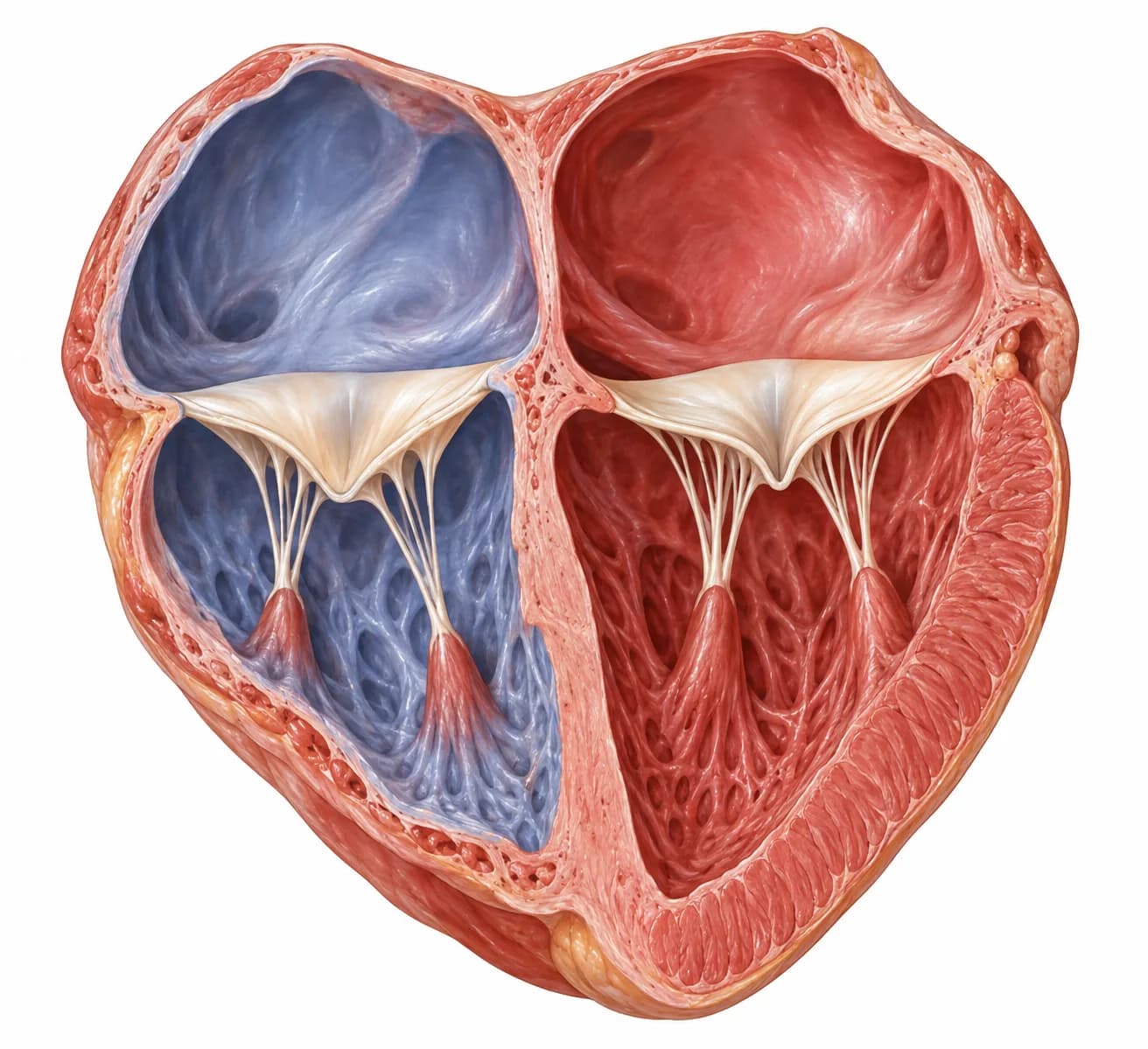
See the anatomy behind the condition.
Chambers, valves and the direction of flow come first, so murmurs, heart failure and valve disease have somewhere to land when you meet them.
- Anatomy
- Physiology
- Assessment
Features
Choose your country, nursing role and exam pathway first. Then use the study activities available for that pathway: learn the concept, practise questions, review rationales, revisit weak areas and track your progress.

These are figures from NurseNest lessons, shown as learners see them. Each one explains a mechanism, and the lesson around it carries that mechanism into findings, assessment and nursing care.

Chambers, valves and the direction of flow come first, so murmurs, heart failure and valve disease have somewhere to land when you meet them.

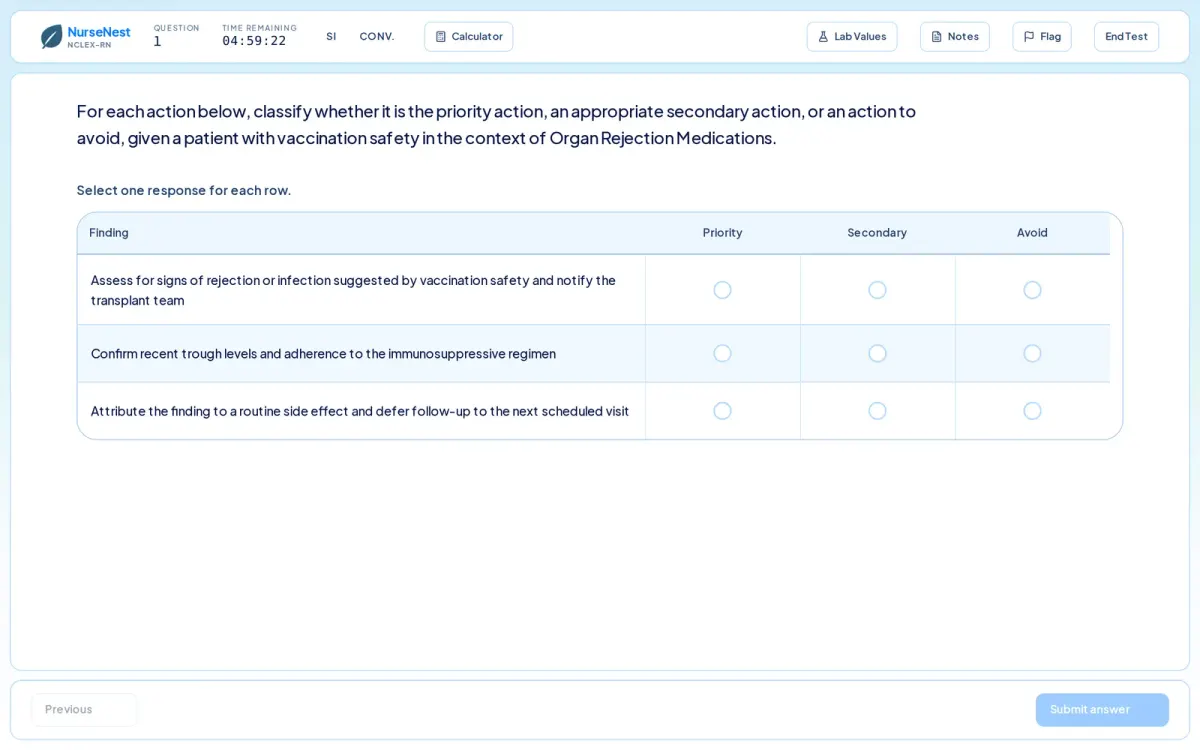
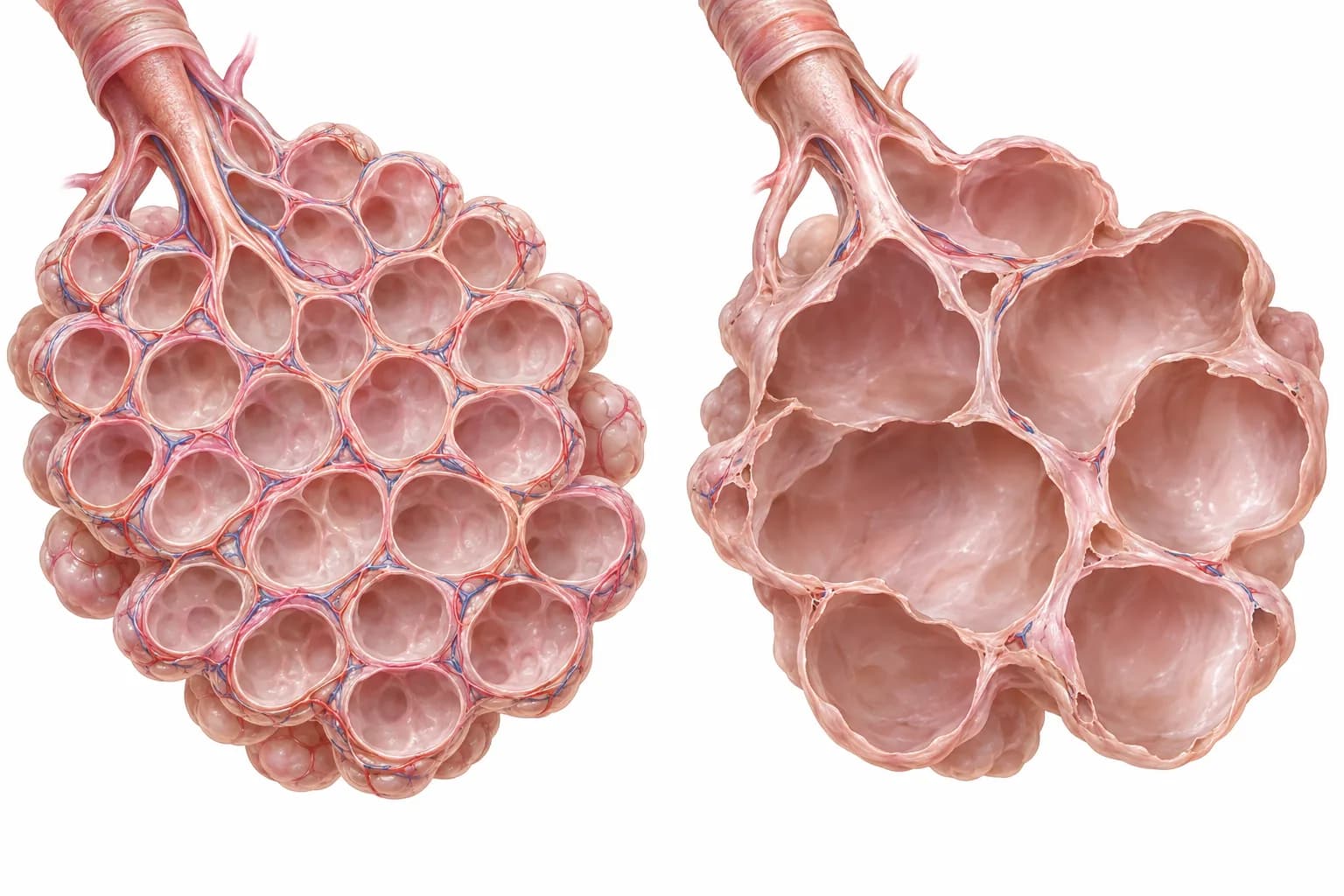
Lost alveolar walls and elastic recoil are what trap air. The lesson carries that mechanism forward into the breathing pattern, assessment findings and care priorities you are tested on.

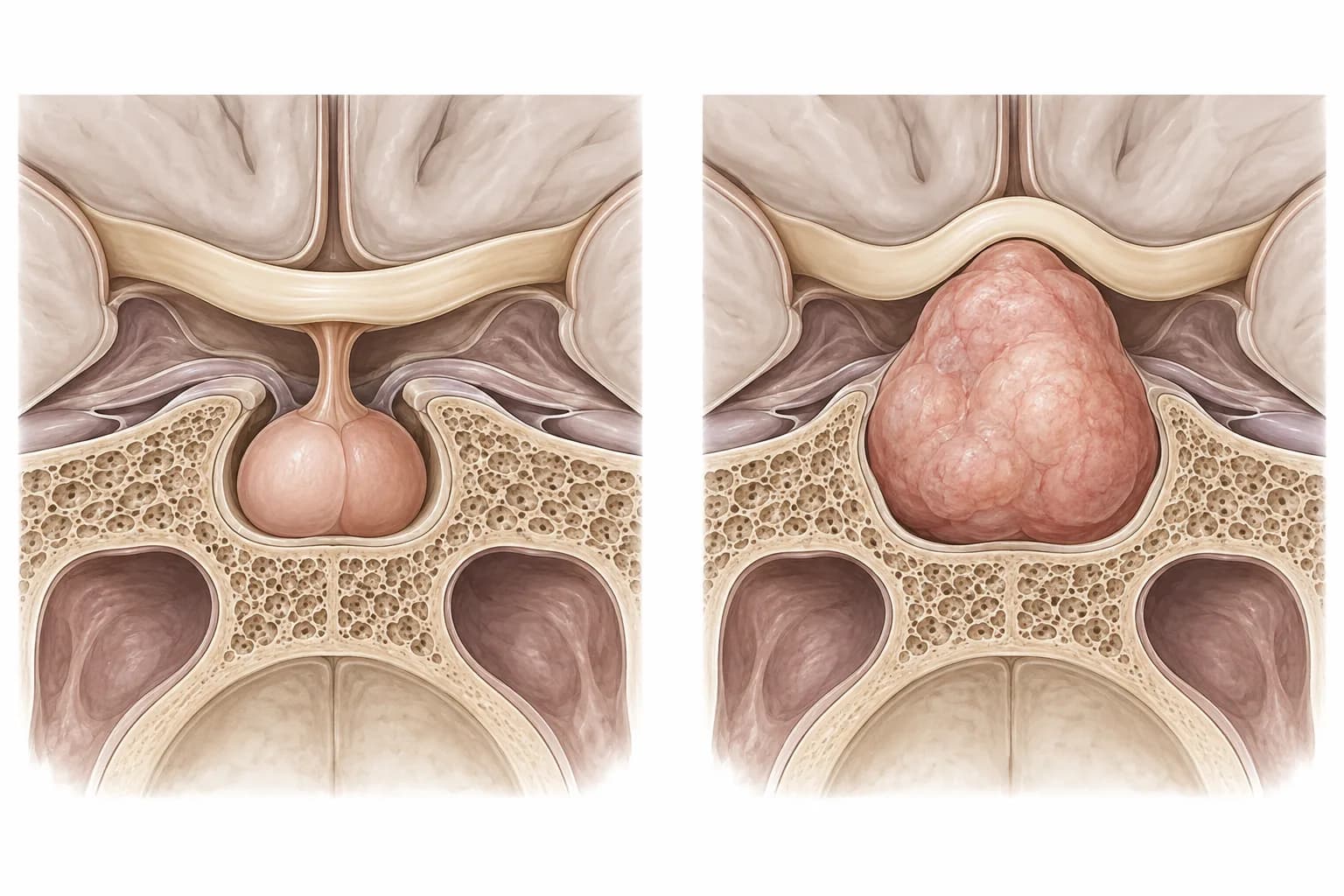
Where a tumour sits explains which visual fields are lost — so a bedside finding points back to the mechanism instead of standing alone as a fact to memorise.
A lesson moves from the mechanism to what you see, what you check, what is done and what the patient needs to know. Shown here with the headings of the acute coronary syndrome lesson.
1 · Learn
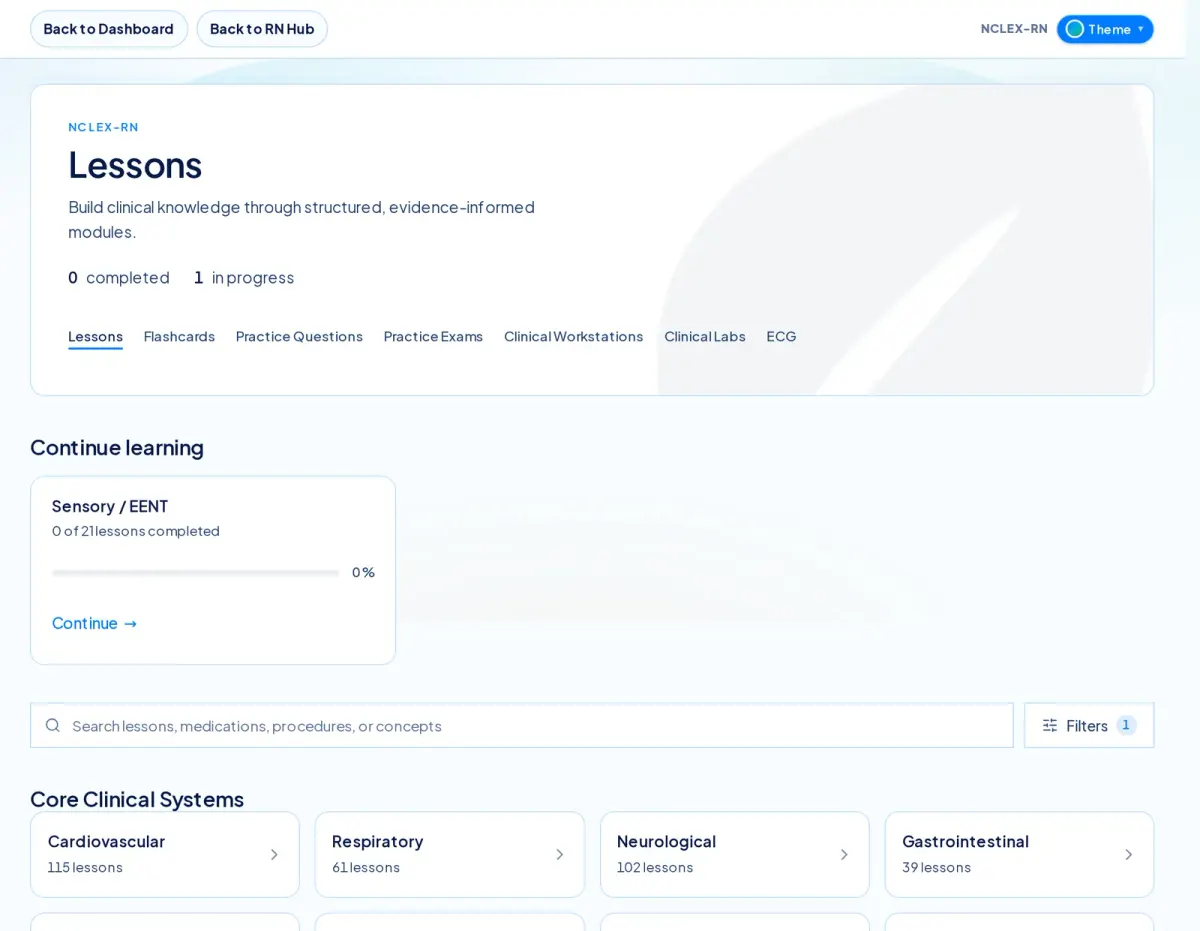
Lessons are grouped by body system for the pathway you selected. Full lessons can include the bottom line, pathophysiology, findings, diagnostics, treatment, nursing care, teaching, red flags and clinical pearls, with assessment checks where available.
Lesson library
The lesson hub shows the systems available for your pathway, the published lessons in each system and where you left off. Coverage differs by exam and region.

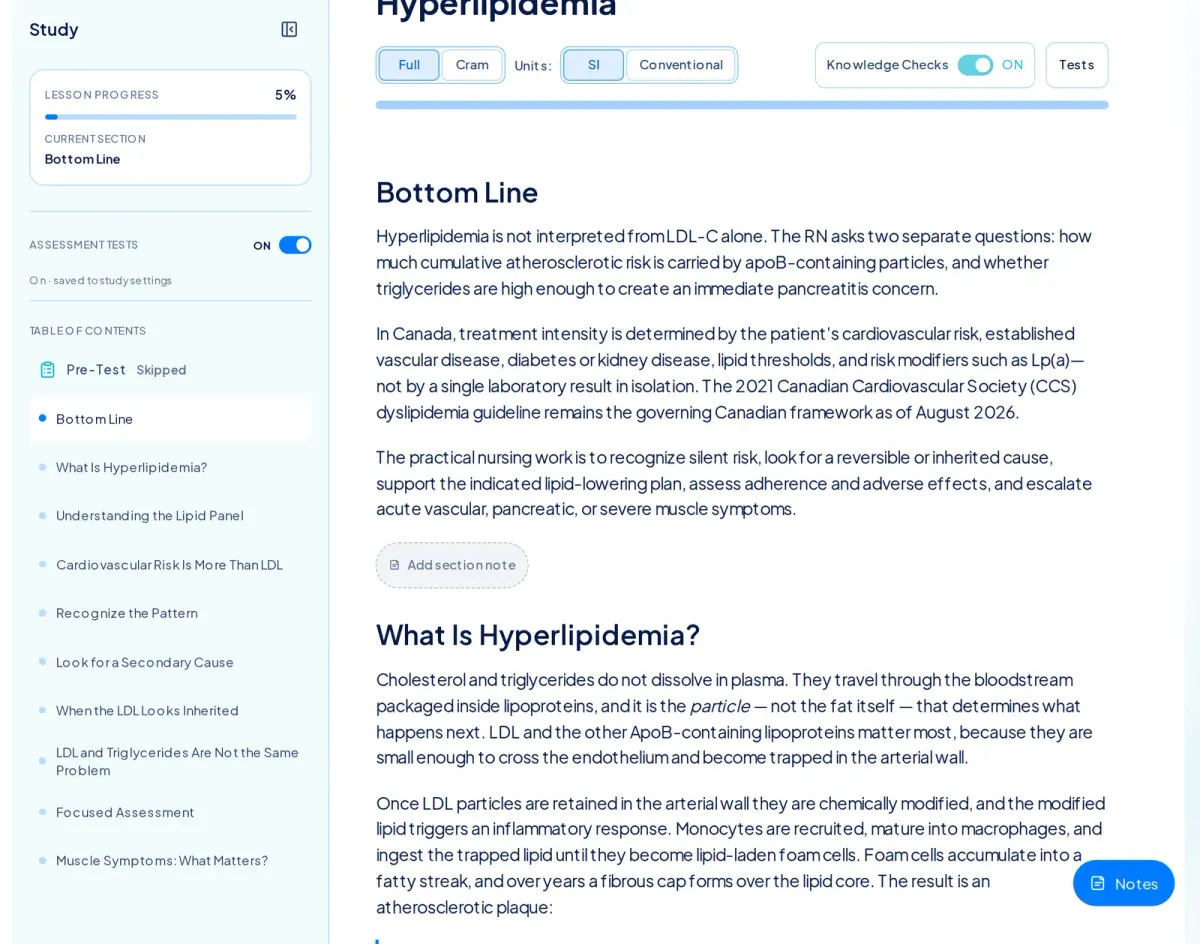
Full lesson
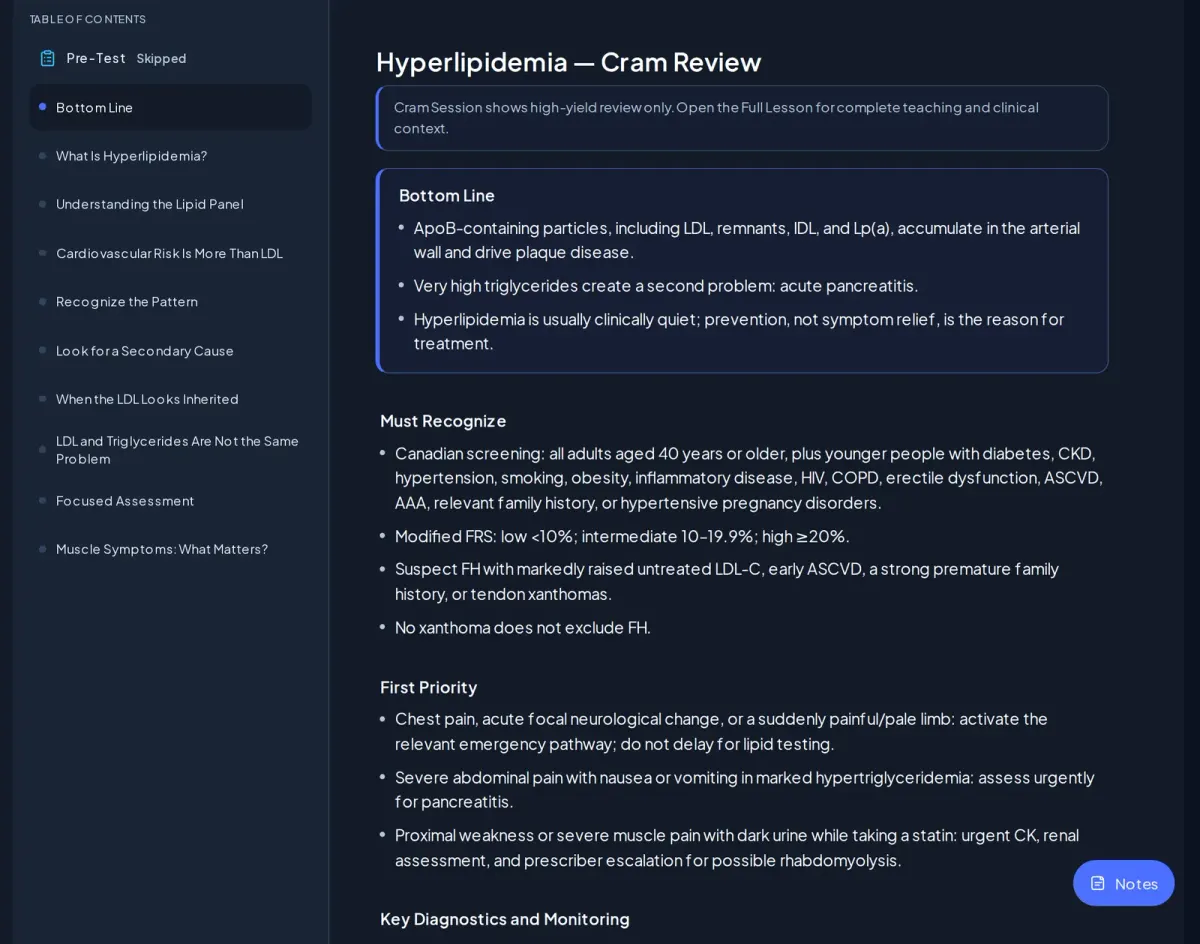
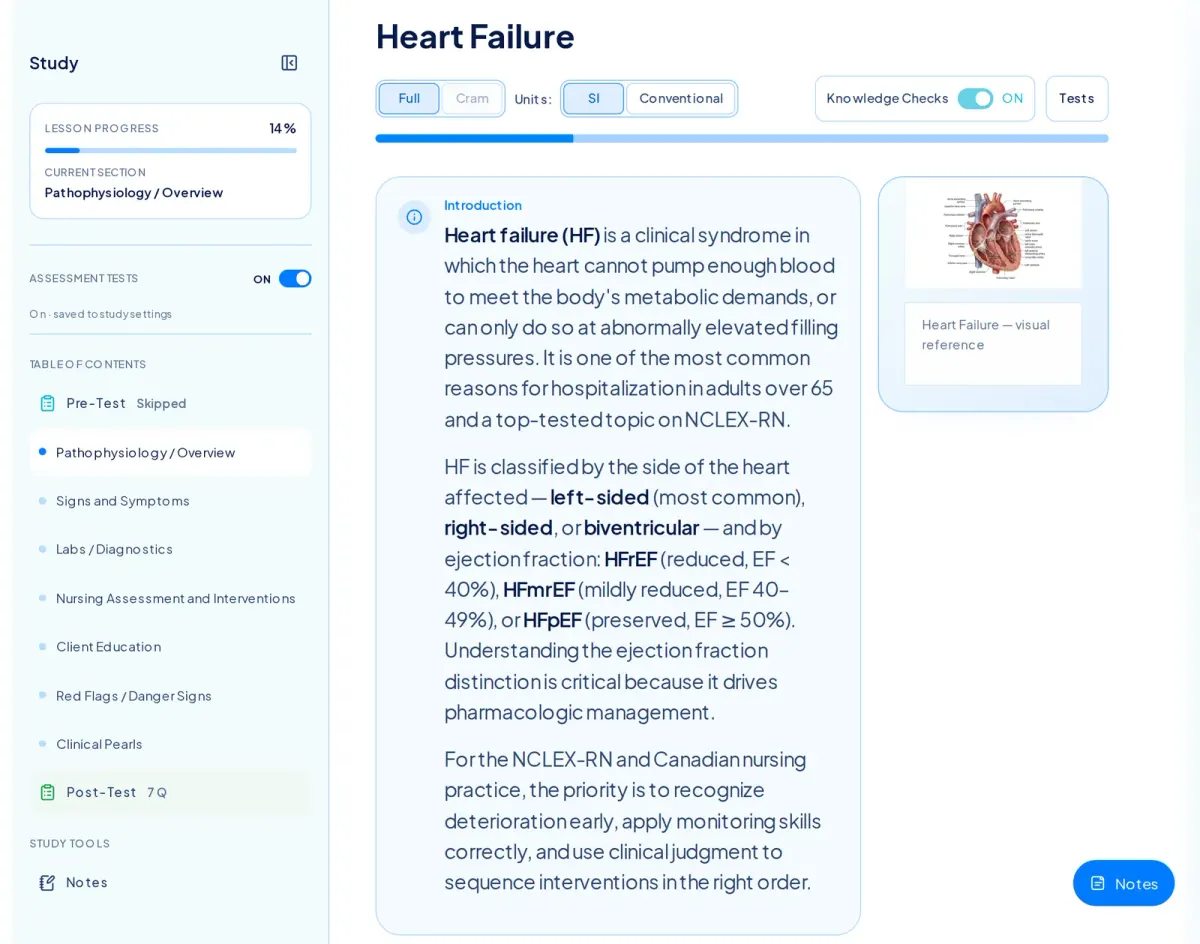
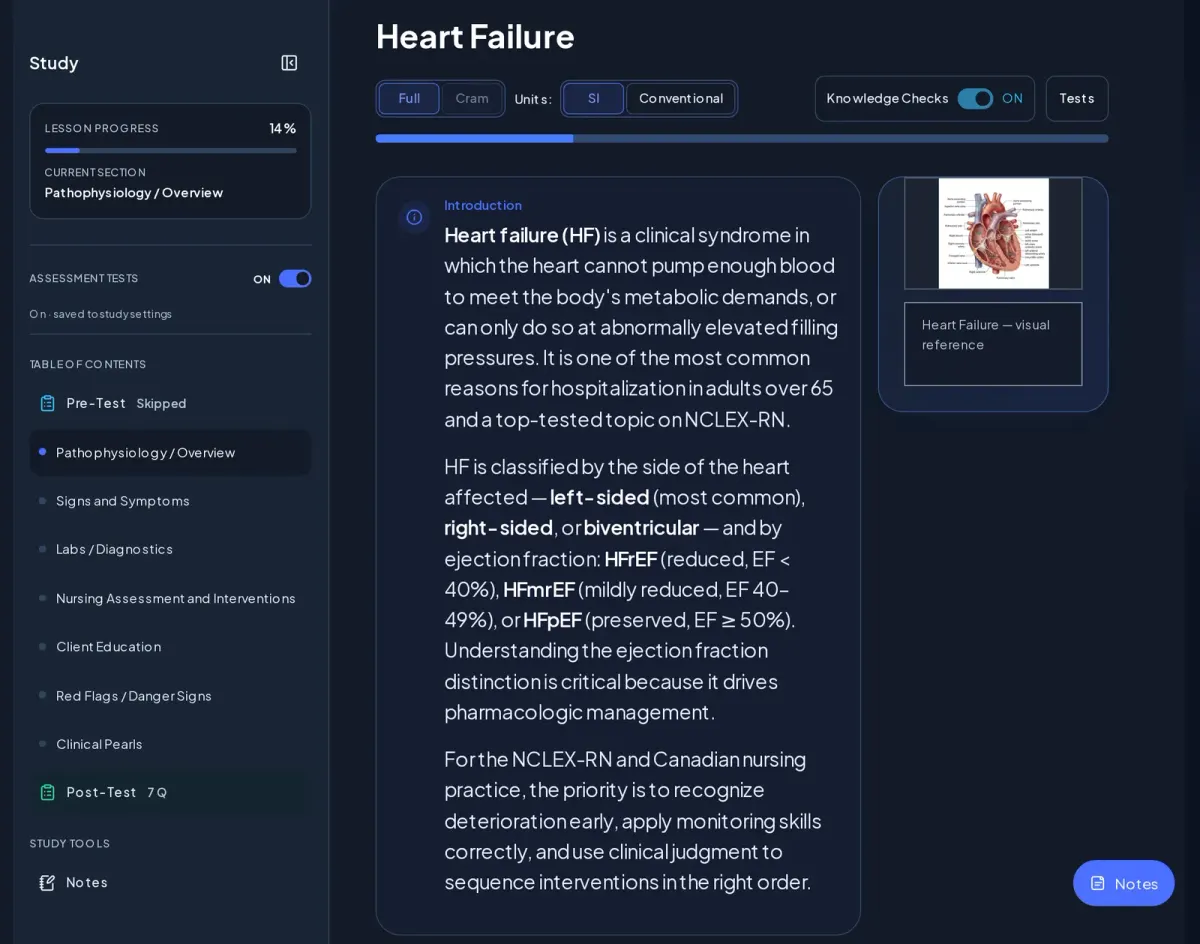
A lesson opens with the point that matters, then teaches the mechanism behind it. The table of contents tracks section progress; knowledge checks and assessment tests can be turned on or off per learner.

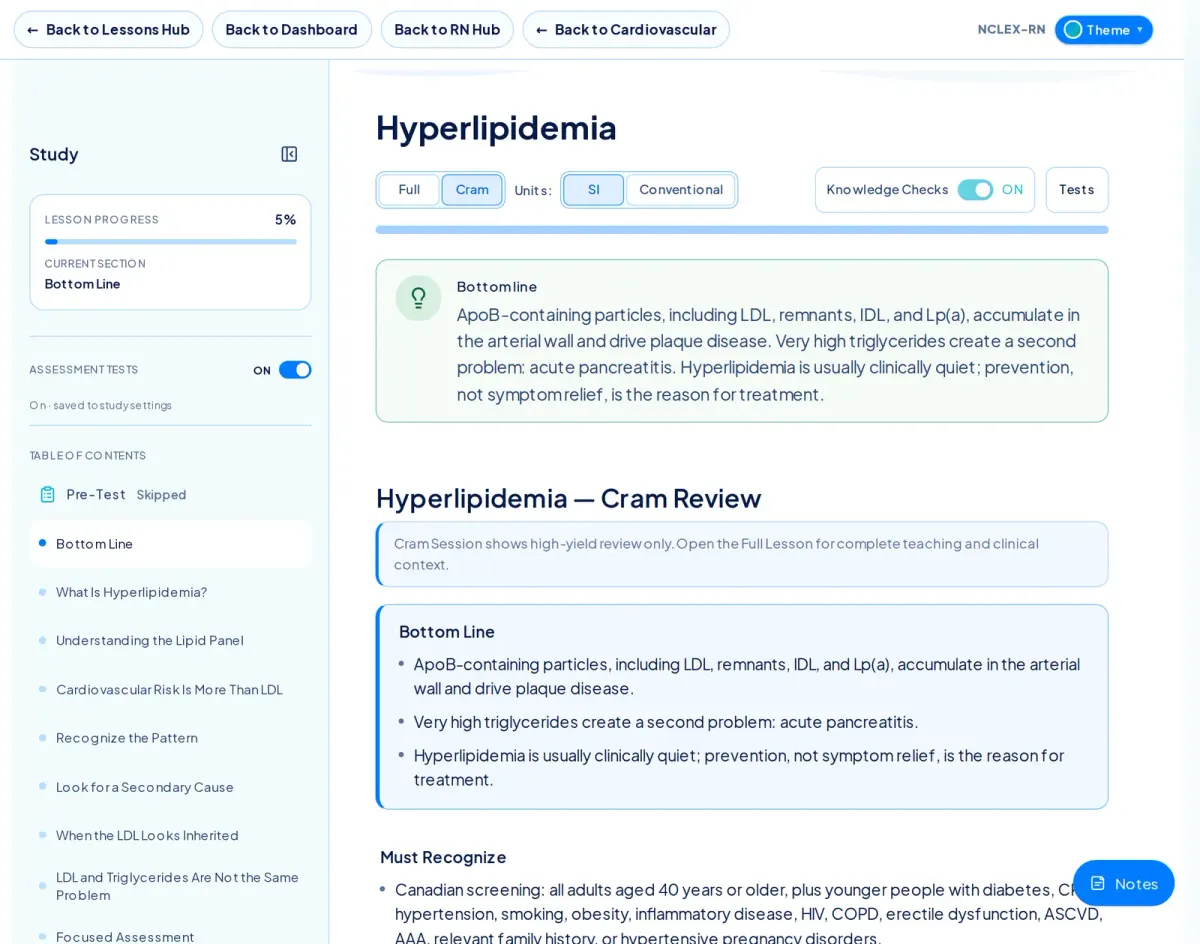
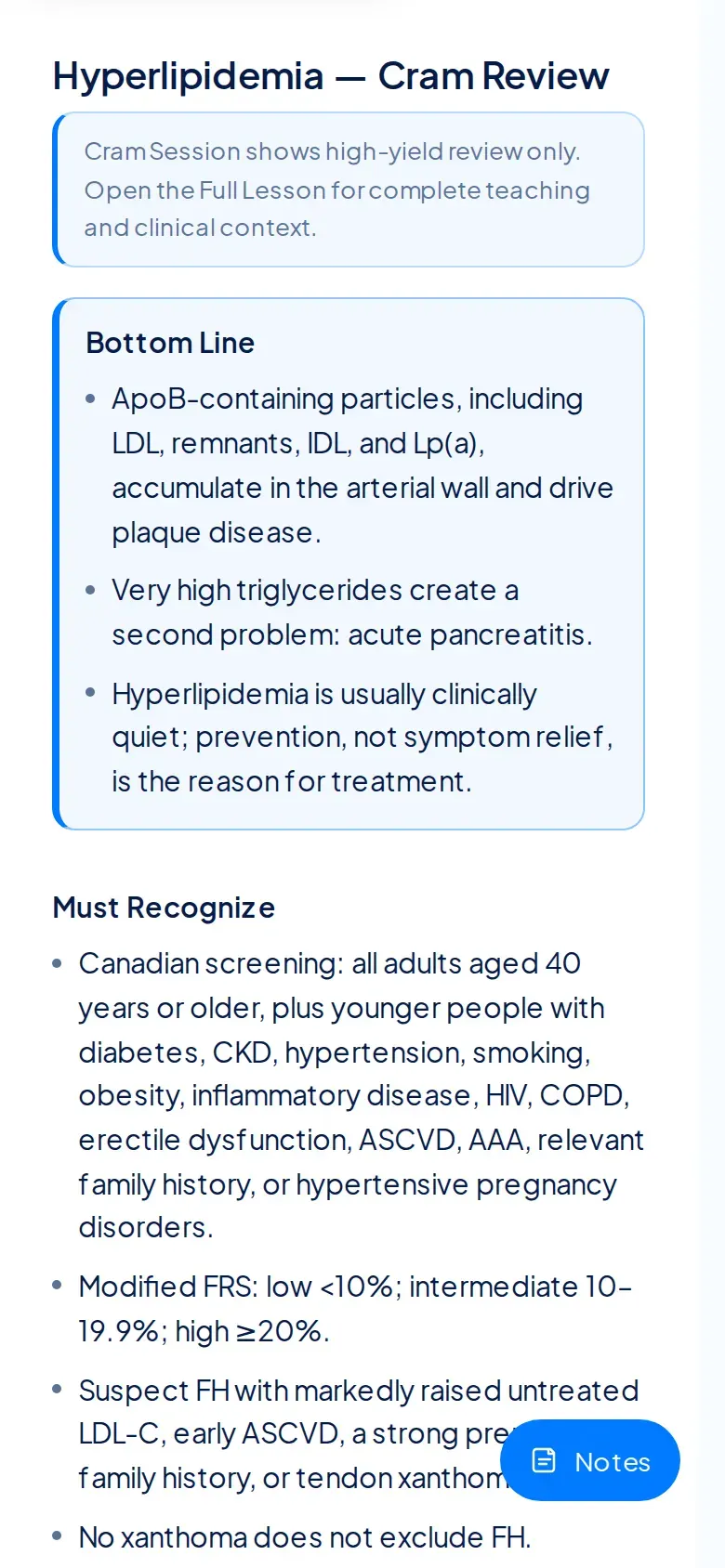
Cram Session is a condensed, exam-essential view of the canonical lesson, reached from the Full/Cram switch. It is never a separate lesson, and emergency and safety content is never removed to save words.


Cram is a condensed view of the same canonical lesson. Where a lesson has no certified Cram release yet, the switch stays on Full.
Clinical Workstations
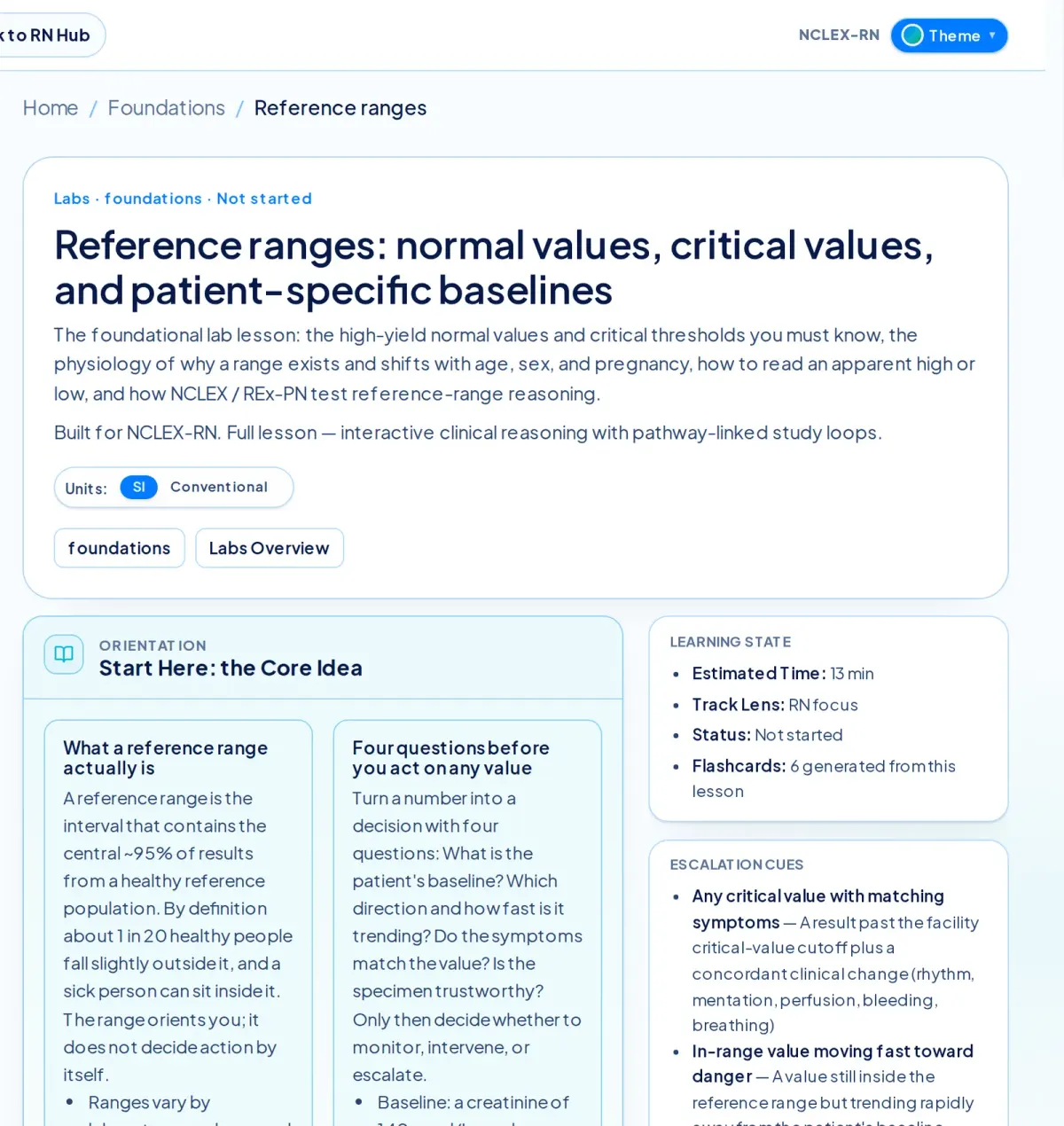
The labs workstation teaches what a reference range actually is, then how to act on a value — direction, trend, symptoms, specimen quality — in SI or Conventional units. ECG rhythm foundations and Medication Math sit beside it.

Lessons carry a visual reference panel — for example the heart illustration beside the Heart Failure lesson.
Interactive clinical modules beyond questions: Clinical Labs, ECG & Telemetry, Medication Math, Clinical Skills, Prioritization and Pharmacology practice.
2 · Practice
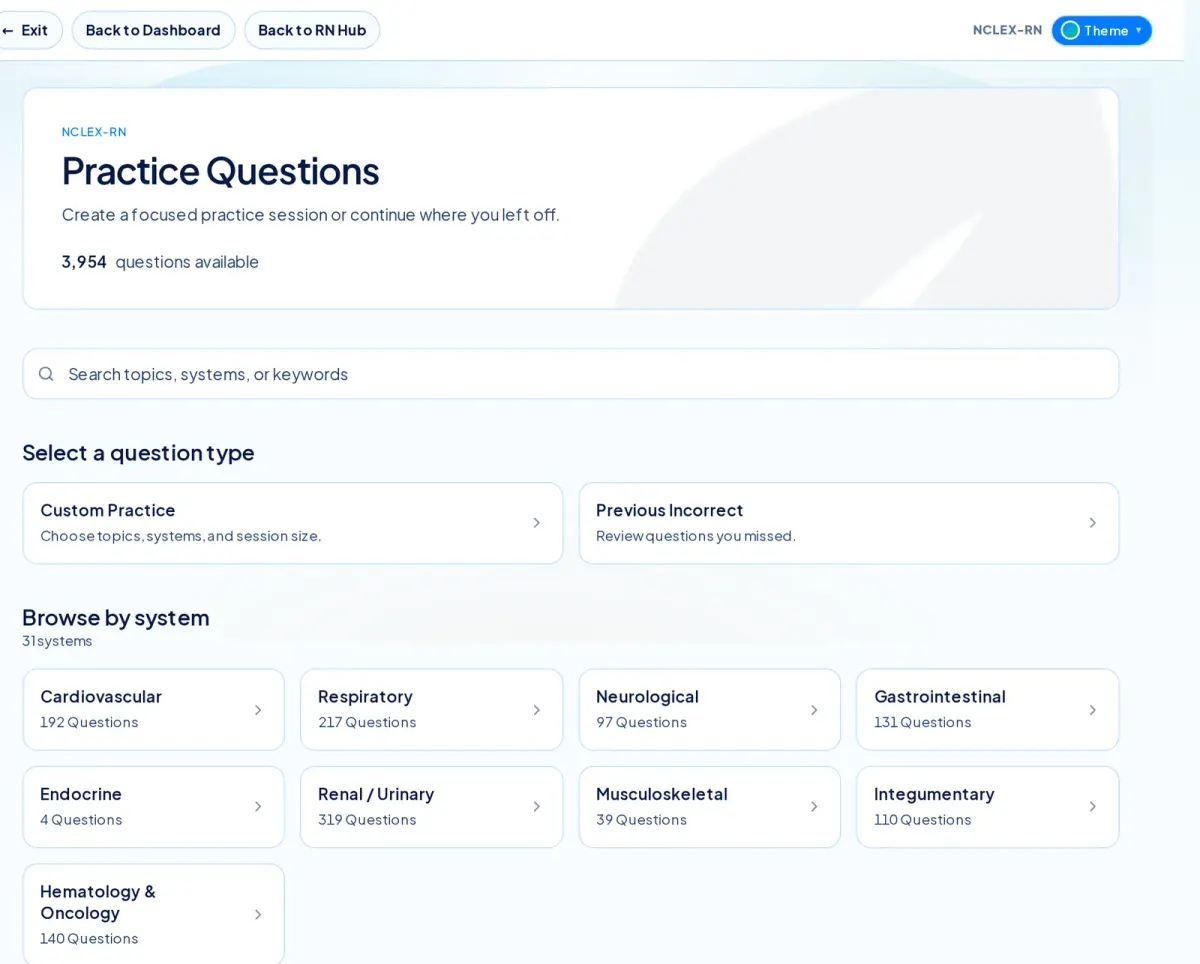
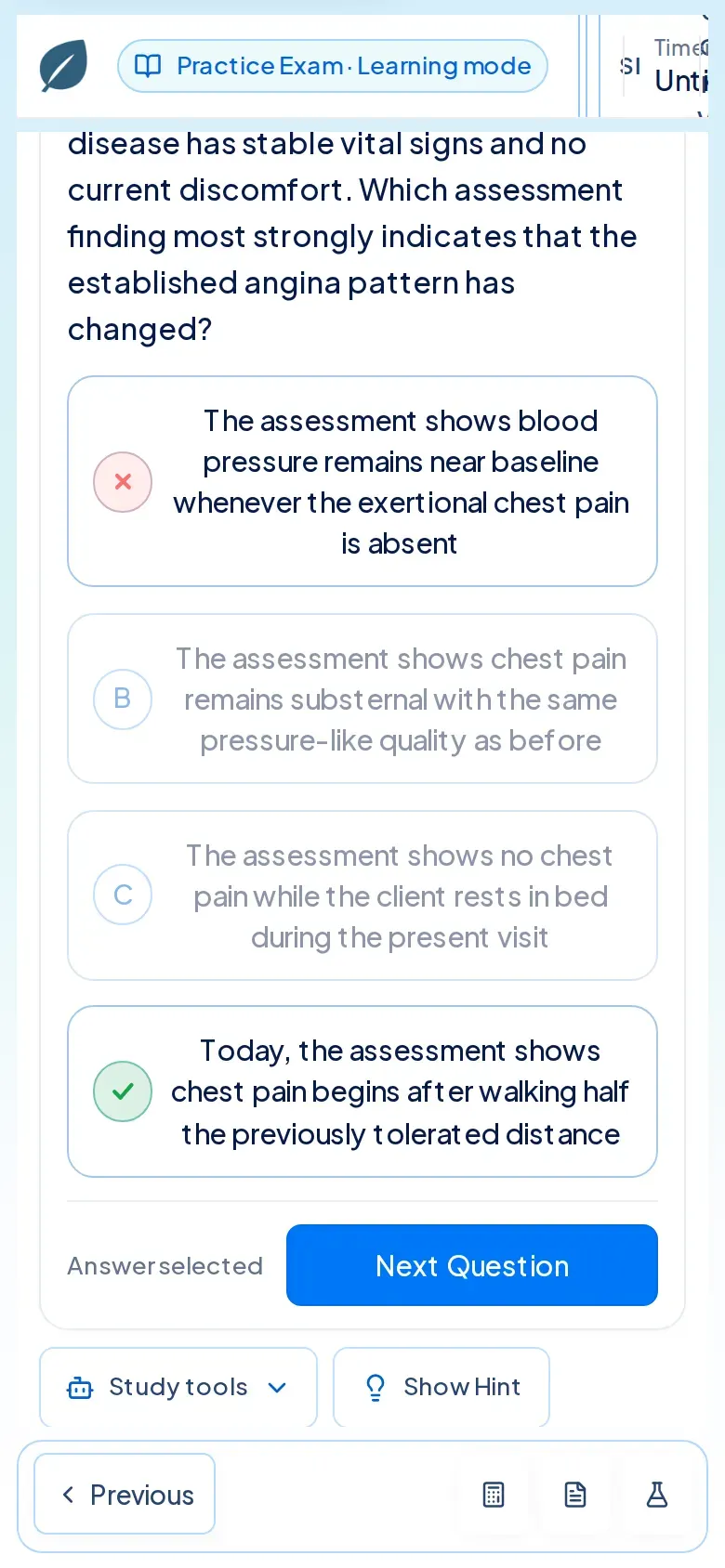
Build a practice session from the filters available for your pathway, such as body system, question type, difficulty, timing and length. After each scored answer, review the rationale for the best option and the distractors. Adaptive exam mode appears only on pathways that support it.
Session setup
Choose from the question types and session controls available for your exam pathway, including targeted system practice and review of previously missed items. Live question counts change as content is published and remediated.

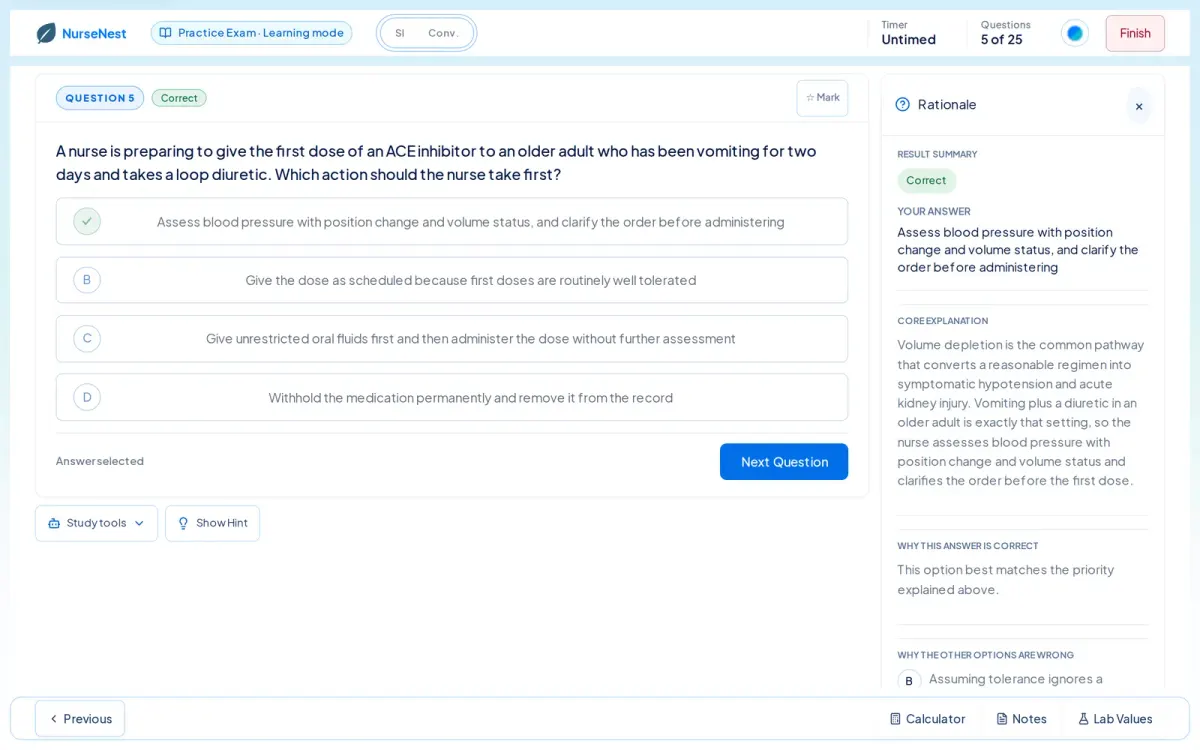
Rationale
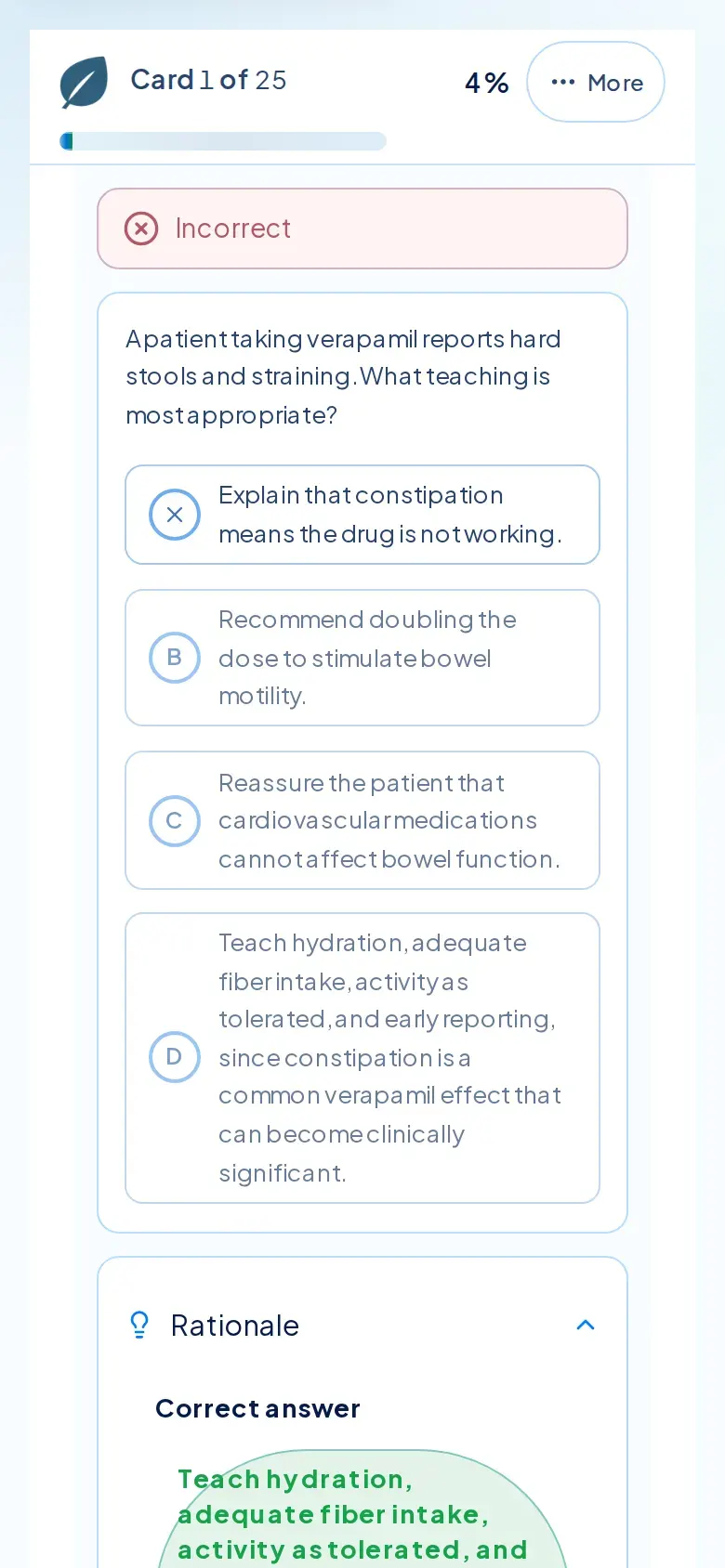
Result summary, your answer, the core explanation, why this answer is correct, why the other options are wrong. On dosage questions the formula, substitution and final dose are shown step by step.

CAT exam
On supported adaptive-exam pathways, CAT practice adjusts to your performance and uses the timing and item formats configured for that exam simulation. Session tools such as calculator, lab values and notes remain available where supported.

3 · Strengthen
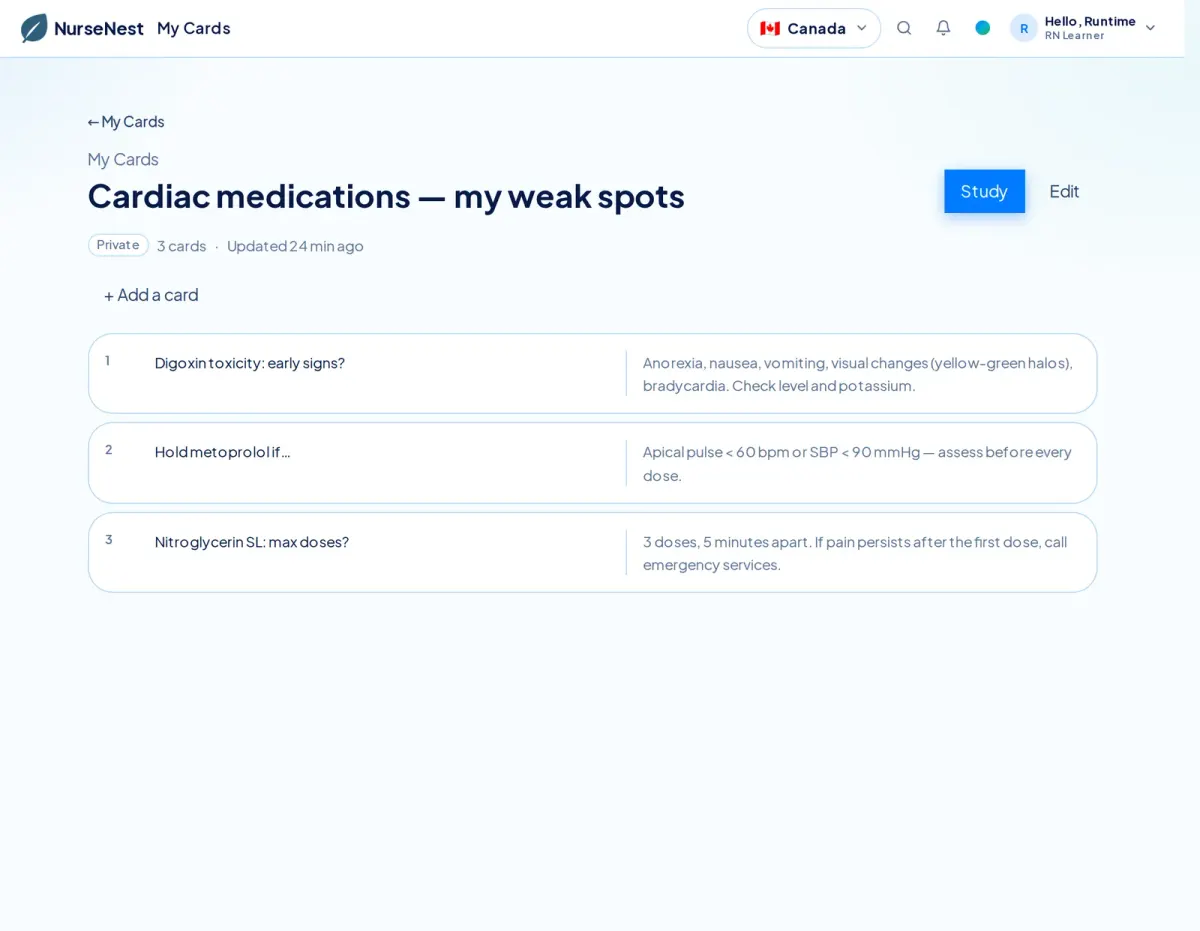
Return to the concepts you found difficult. A missed question is taught, not just marked; flashcards carry their rationale and ask how well you knew it; My Cards holds the facts you keep missing.
Incorrect answer
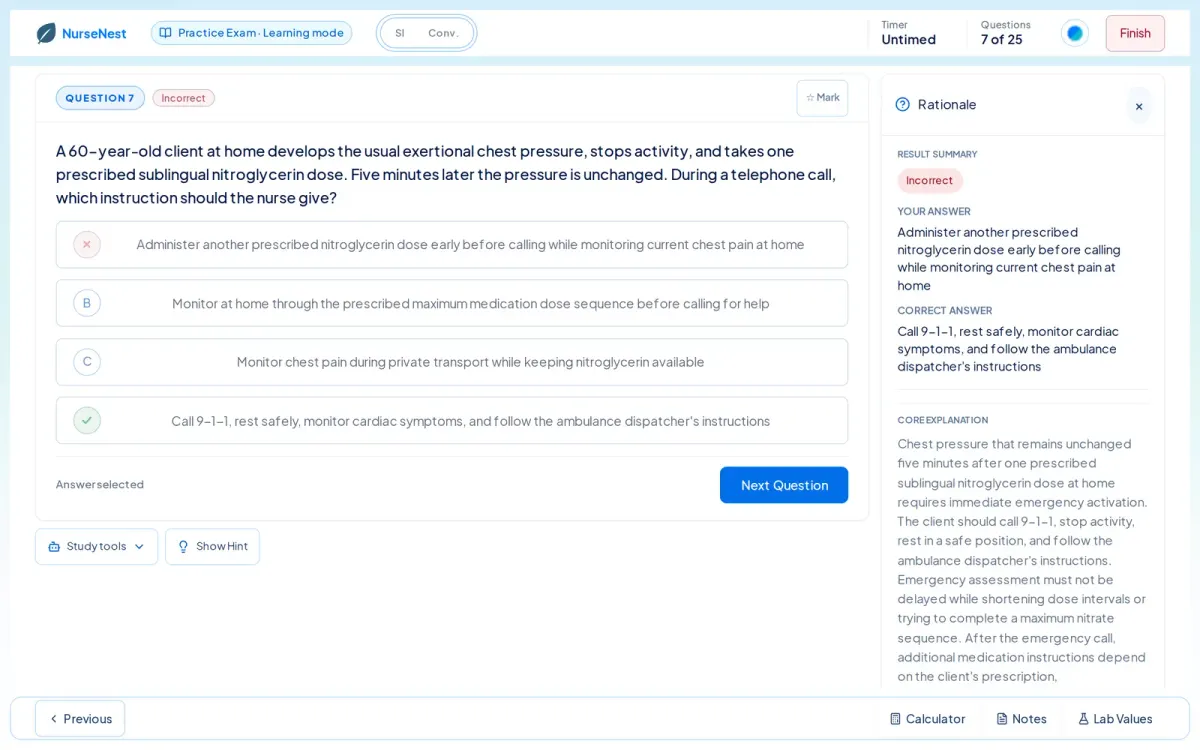
When you miss, the correct option is shown beside yours and the rationale explains the reasoning — here, why unchanged chest pressure after nitroglycerin means calling emergency services, not another dose. Review-what-you-got-wrong sessions bring it back.

Flashcards
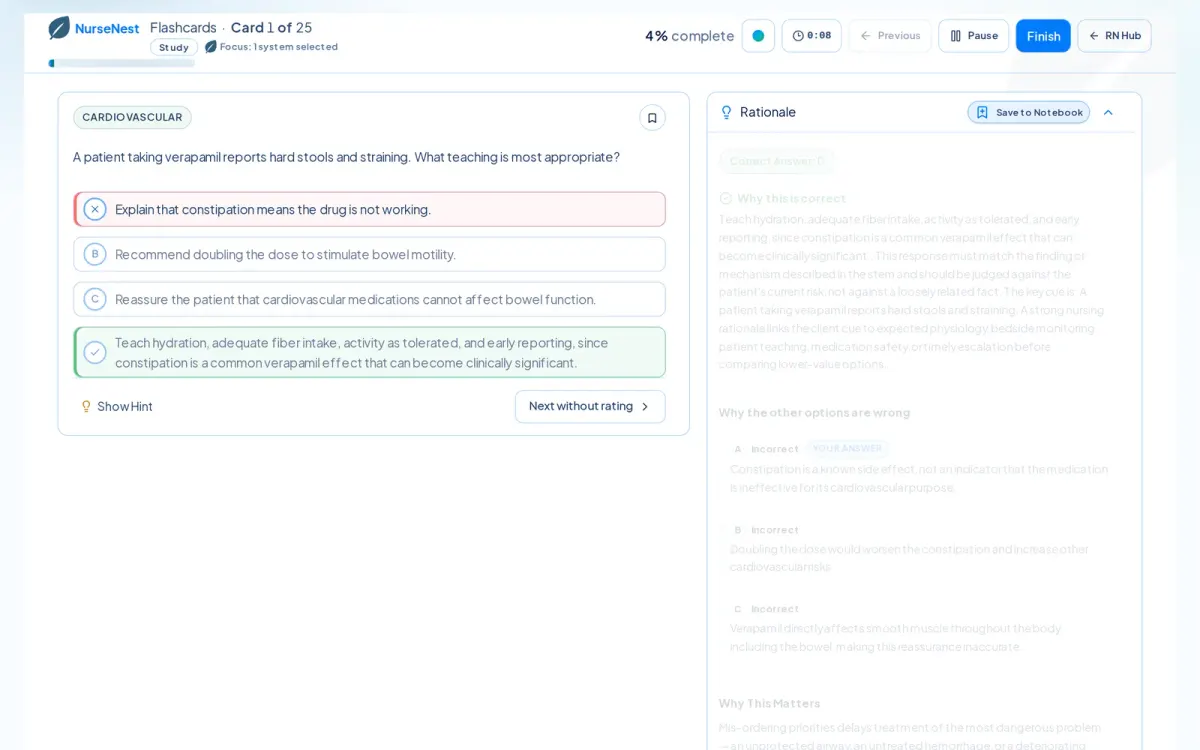
Pathway-scoped flashcards are organised by body system where available. Grade each card Again, Hard, Good or Easy and rate your confidence so review can focus on material that still needs work.

My Cards
Create a private deck, add front-and-back cards in seconds, and quick-flip through them with Again / Got it. NurseNest-authored decks stay under Flashcards; My Cards is yours.

4 · Measure
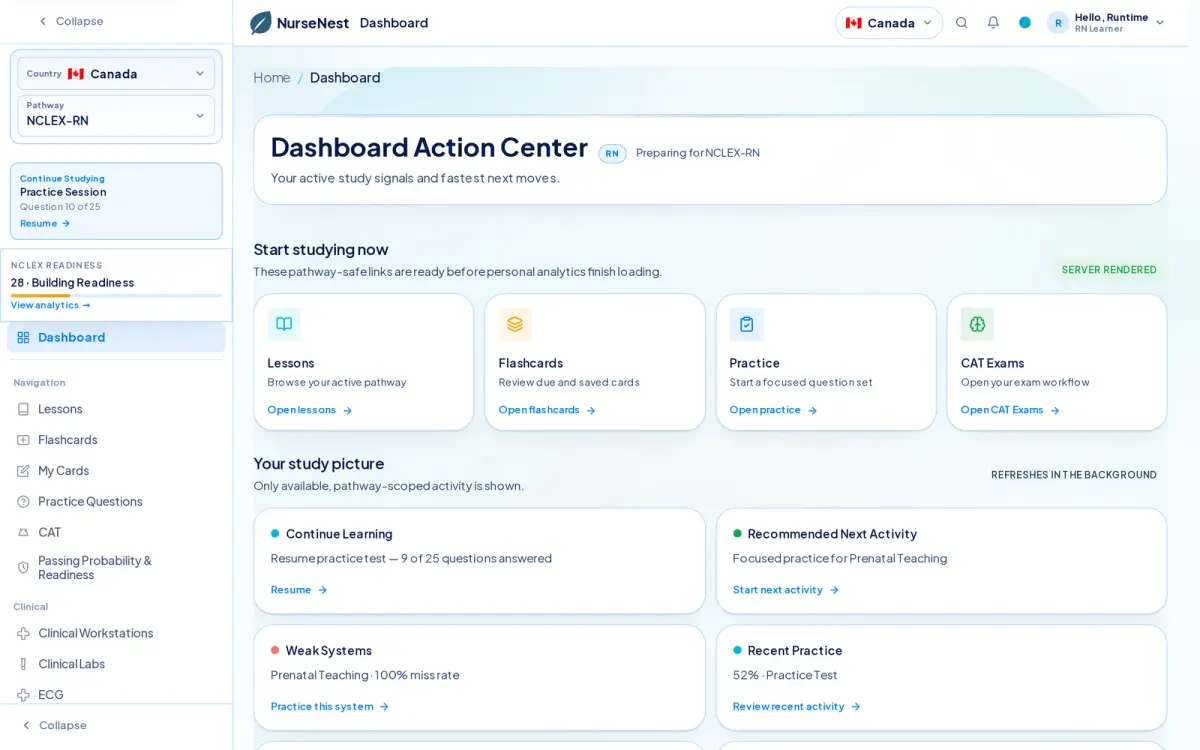
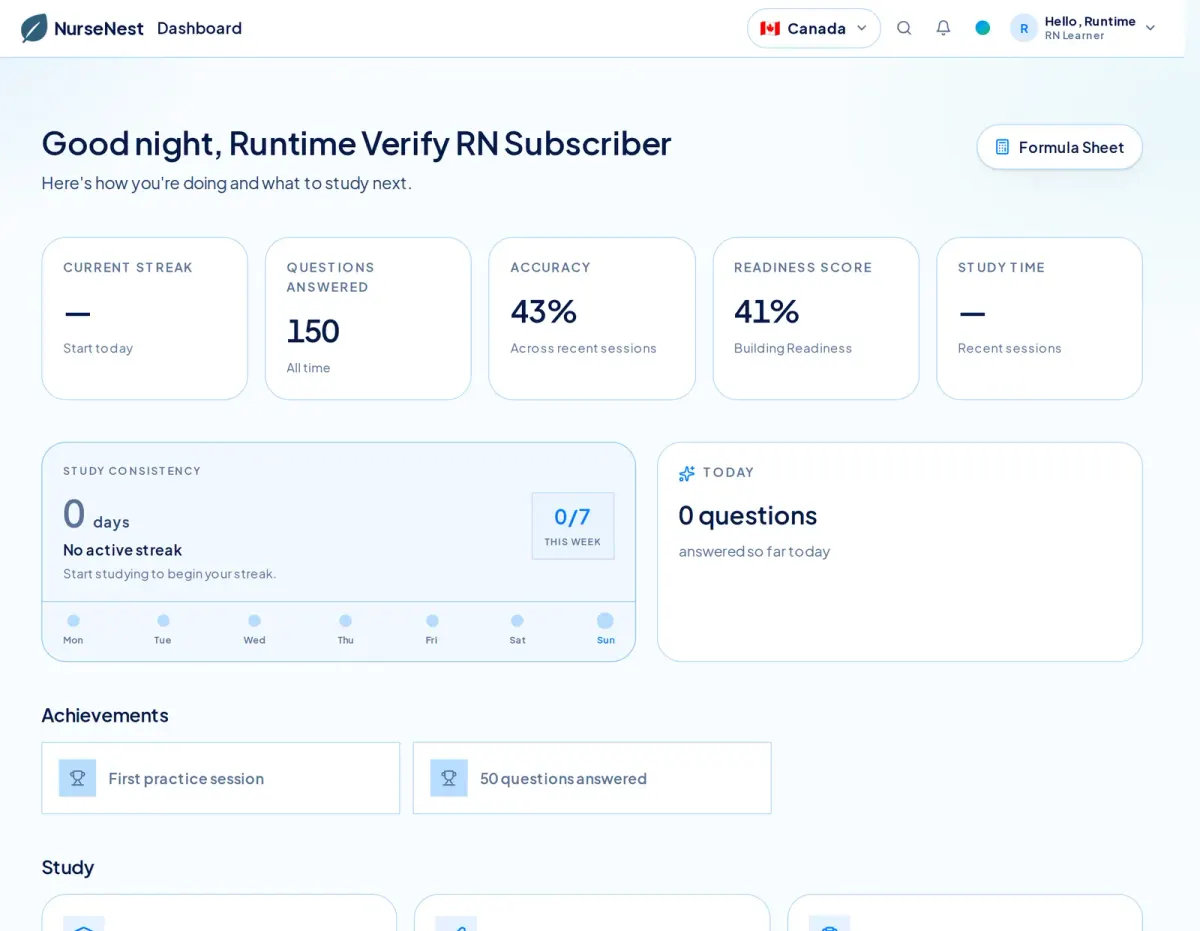
The dashboard turns your activity into a next step. Exam readiness analytics, an exam countdown with a recommended pace, streaks and achievements sit alongside — all computed from what you actually answered.
Dashboard
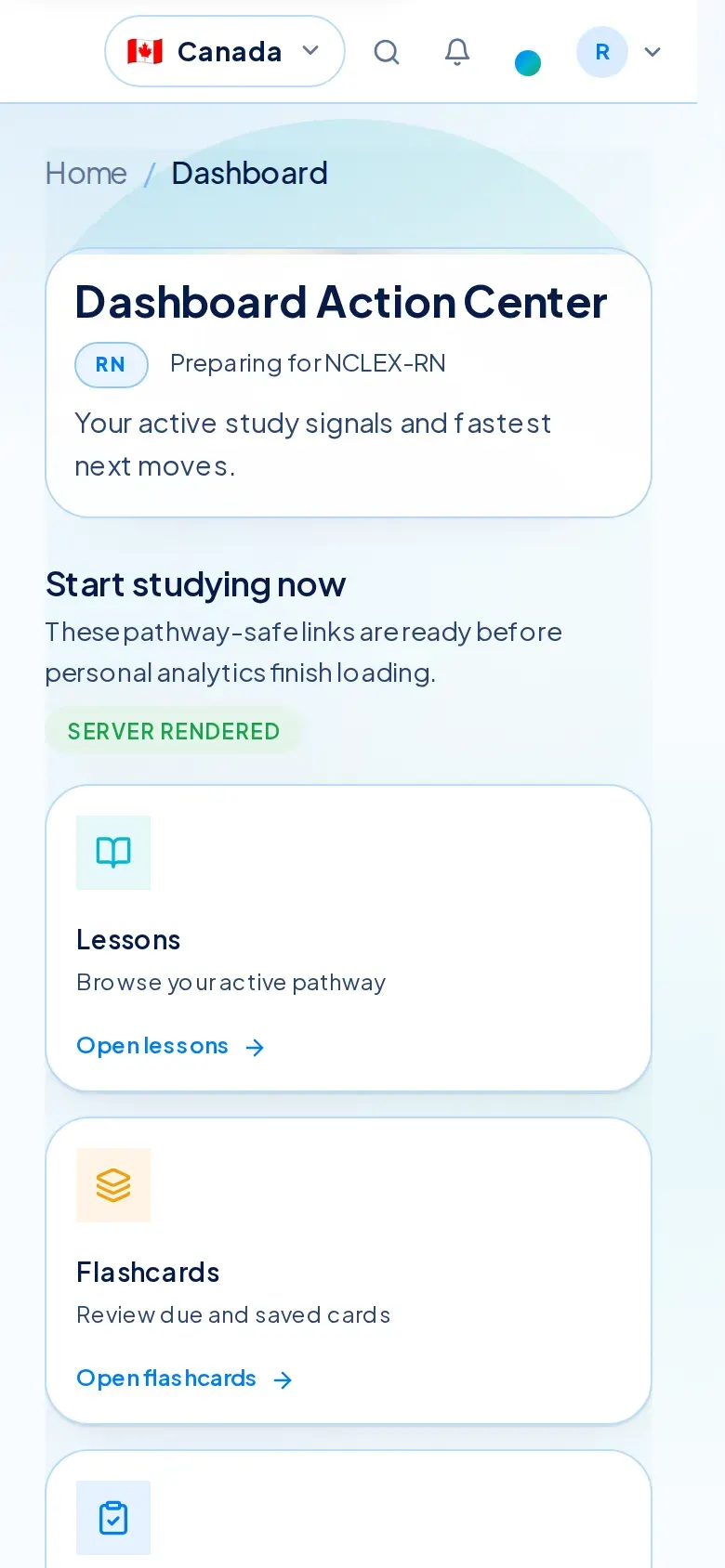
Four one-tap starts (lessons, flashcards, practice, CAT) sit above your study picture: what to continue, the recommended next activity, weak systems with miss rate, recent practice score, readiness trend and lesson progress.

Exam readiness
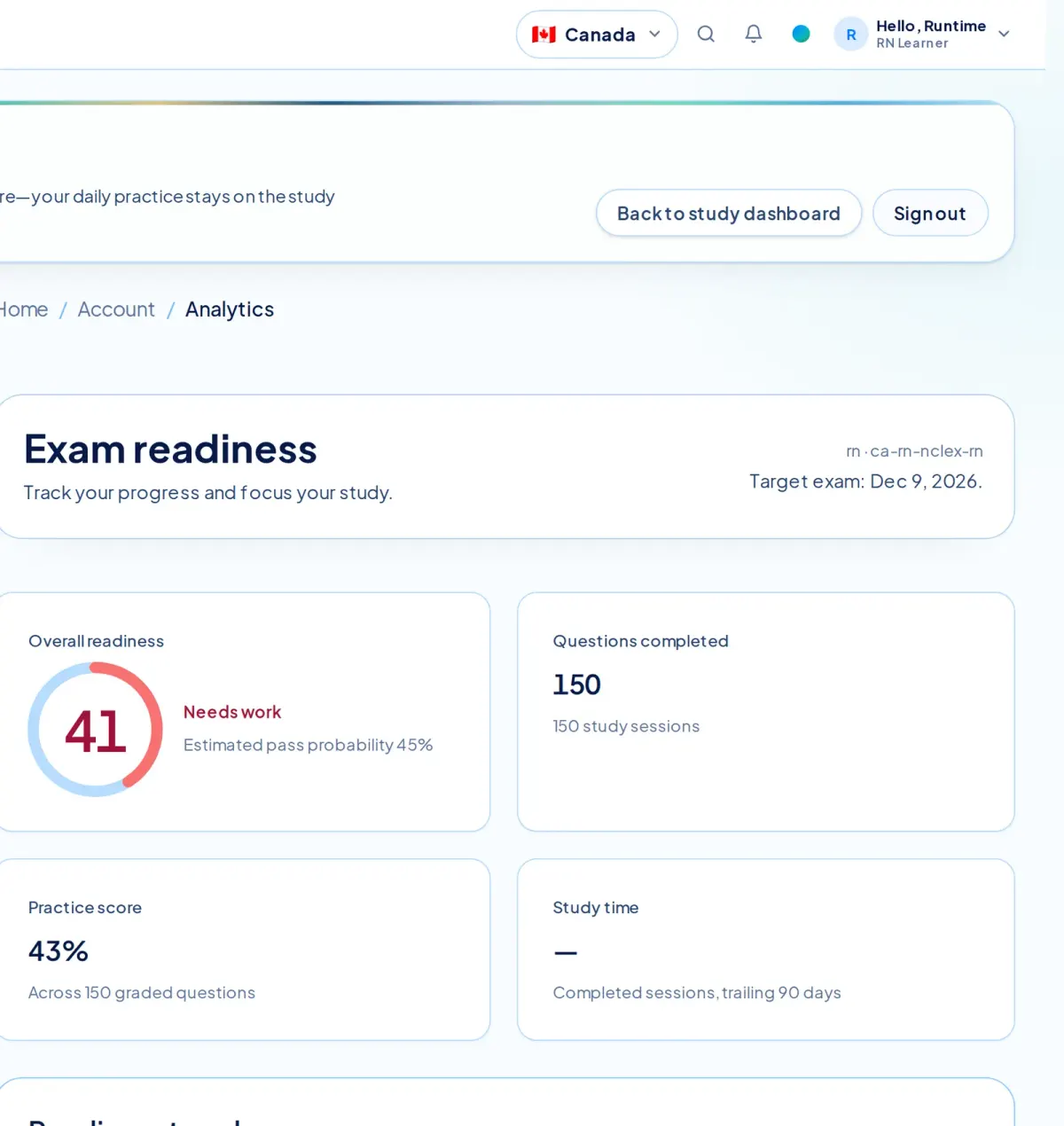
Progress tools bring together your completed questions, practice performance, study activity and exam date. They are study guidance, not a prediction or guarantee of an exam result.

Study tools
Current streak, questions answered, accuracy across recent sessions, readiness score and study time, a weekly consistency tracker, achievements and a formula sheet.

The same product renders at phone width in the browser, follows the theme you choose, switches SI and Conventional units, and scopes everything to your country and pathway.


Lessons, Cram, practice, flashcards and the dashboard render at phone width in the browser — no separate app required.
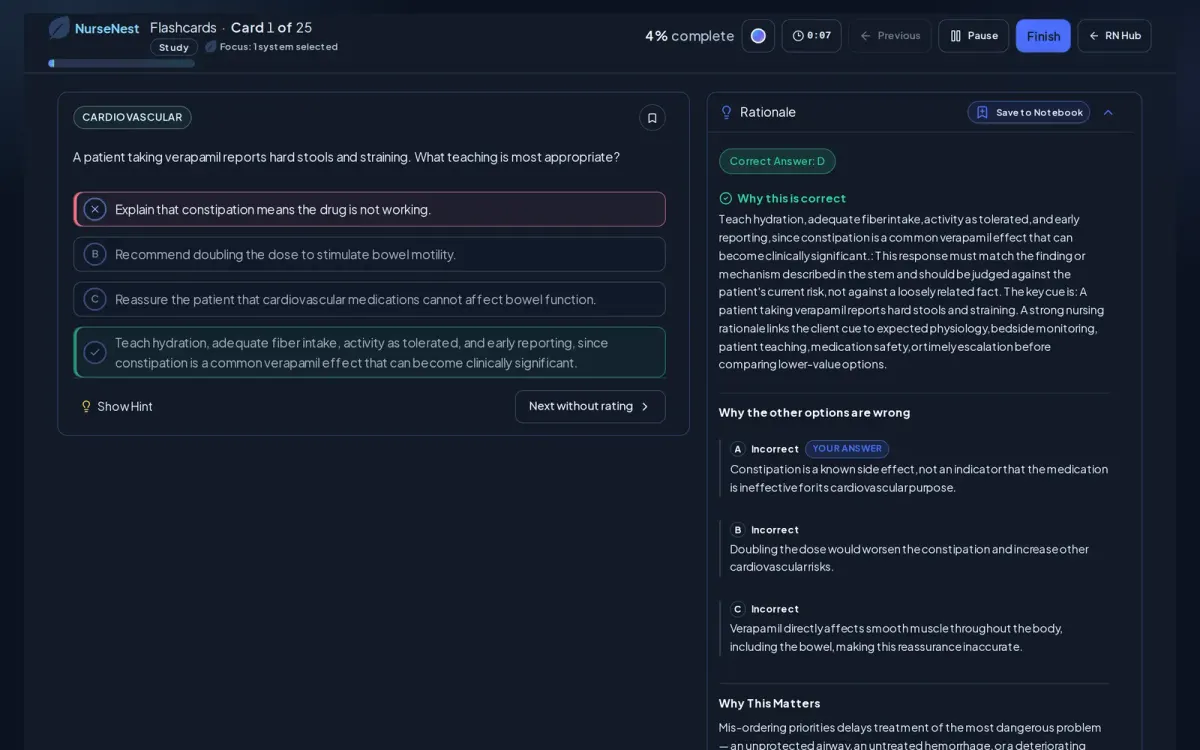
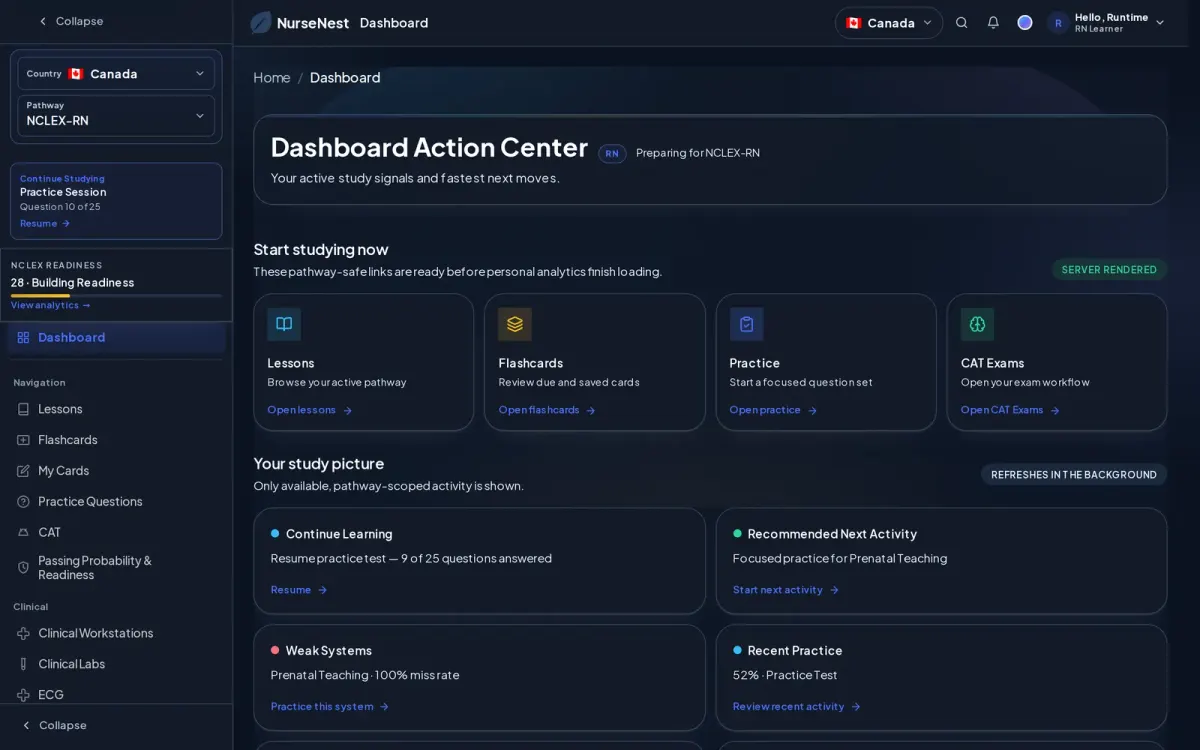
Pick a light theme such as Ocean or a dark theme such as Midnight from the theme menu; the whole product follows.
The learner shell is scoped to a country and pathway (for example Canada · NCLEX-RN) and every hub, count and session follows that choice.
Lessons, labs and questions switch between SI and Conventional units; the practice runner offers English plus partial French, Spanish, Portuguese and Hindi interface translations.
Screens are unedited captures of the NurseNest learner application, taken on 2026-09-20 on the Canadian NCLEX-RN pathway. Counts shown are what that pathway displayed that day.
LearnPracticeStrengthenMeasure
Explore the study resources available for your pathway.
Plans are purchased for a specific pathway. The pricing page lists exactly what the selected pathway and plan include. Core activities can include lessons, practice questions and rationales, flashcards, My Cards, clinical workstations and progress tracking; CAT and Cram appear only where supported. Advanced ECG is separate from standard pathway access.